EmployMe
Taking the stress out of the job search.
EmployMe is an intelligent job-search companion that automatically tracks applications, organizes next steps, and helps candidates prepare for interviews.
By connecting to a user's email and LinkedIn, EmployMe identifies application updates and moves opportunities through the hiring process automatically, reducing the need for spreadsheets, notes, and manual tracking.
Role: Product Designer
Scope: UX Research · Product Strategy · UX/UI · Prototyping · Design System
Platform: Desktop + Mobile

The Problem
Submitting an application is only the beginning.
Candidates then have to keep track of recruiter emails, interview schedules, company research, follow-ups, notes, and application statuses across multiple platforms.
As applications accumulate, managing the job search becomes a job itself.
The challenge
How might I reduce the manual work of tracking applications while helping candidates feel more prepared for what comes next?


Understanding the Journey
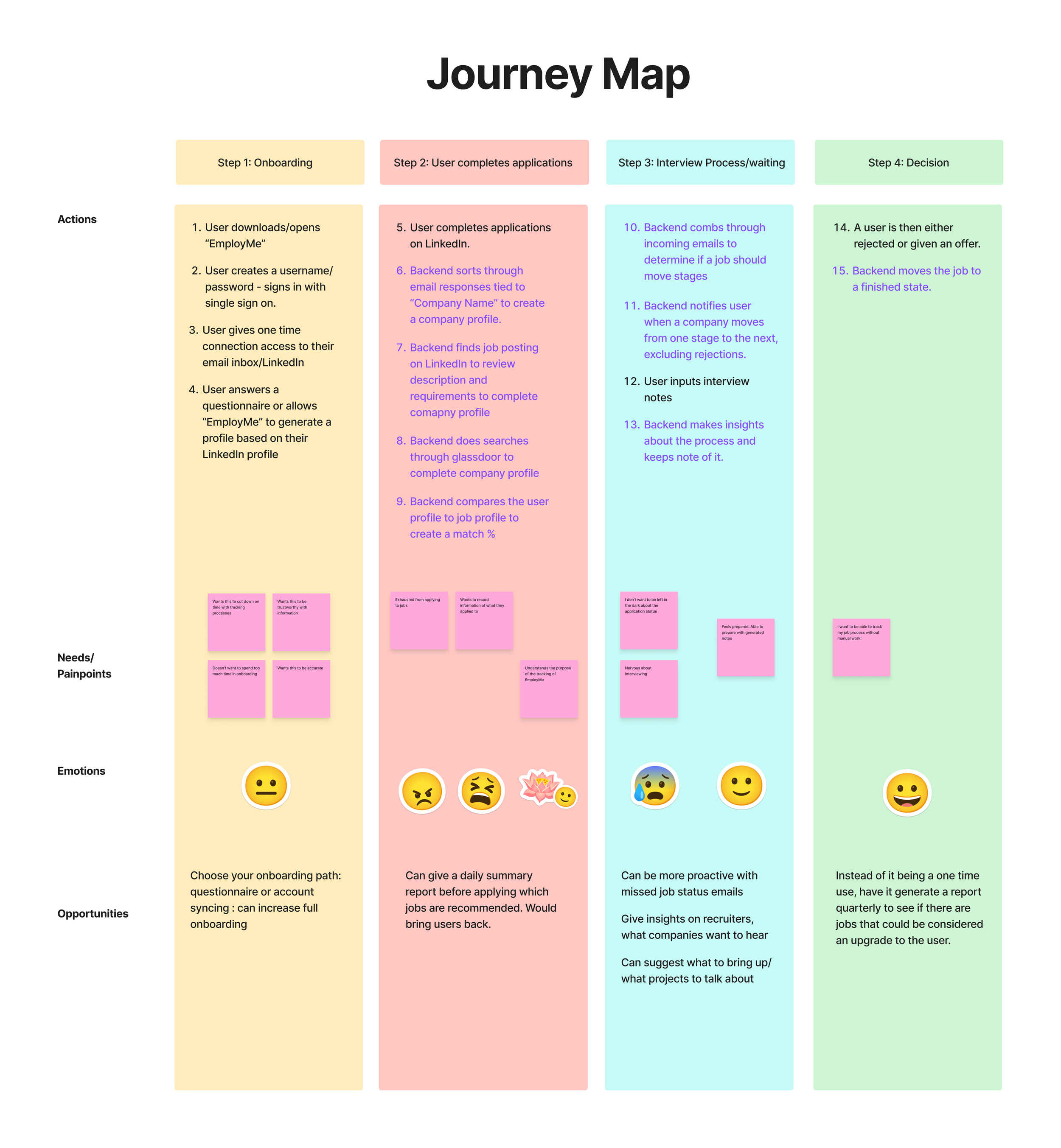
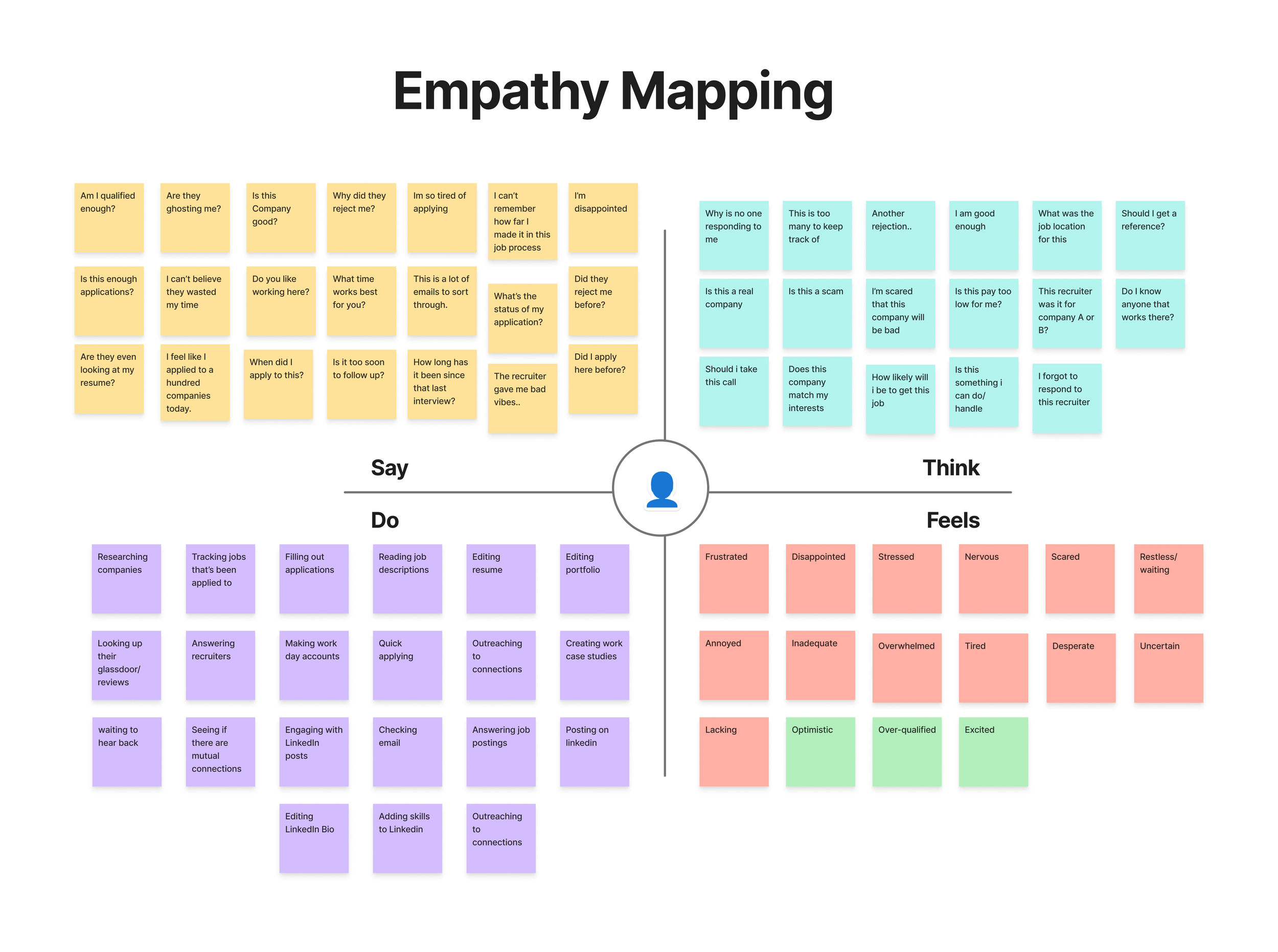
I mapped the experience from application to final decision, focusing on what candidates think, feel, say, and do throughout the process.
Four key stages emerged:
Onboarding → Applications → Interviewing & Waiting → Decision
The biggest opportunity wasn't creating a better tracker—it was reducing how much tracking the user had to do in the first place.
Defining the Product
From the journey mapping, I established several core jobs EmployMe needed to perform:
Automatically track applications after they've been submitted.
Connect with email to recognize application and recruiter communication.
Use communication signals to identify changes in application status.
Connect with LinkedIn to establish a candidate profile and career preferences.
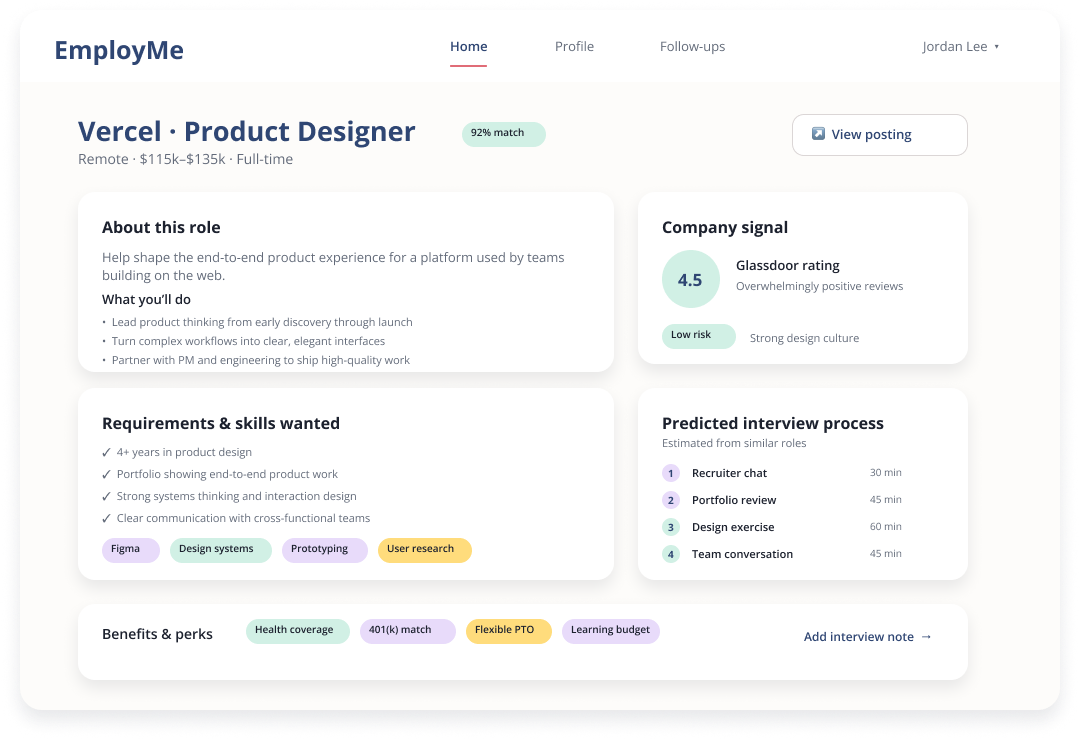
Create centralized profiles for each company and role.
Surface company information, benefits, job requirements, and employee sentiment.
Identify upcoming actions and follow-ups.
Help candidates prepare for interviews using the context already available within the platform.
This shifted the concept from a job tracker into a job-search companion.
01. Automating the Tracking
EmployMe connects to email and LinkedIn to recognize job-related communication and automatically update application progress.
A request to schedule an interview can move an application forward, while a rejection can close it out.
Instead of asking:
"How do I design a better job tracker?"
I began asking:
"How much of the tracking can the product do for you?"
02. Building Trust Through Onboarding
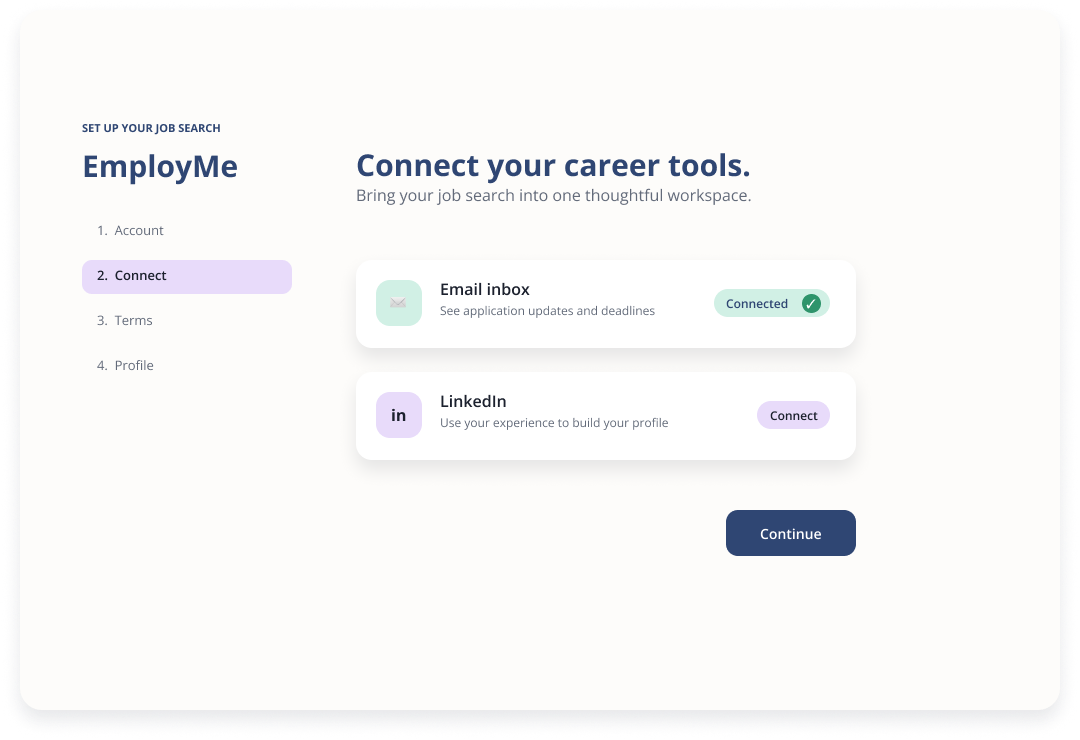
Automation requires access to personal information, making transparency an important part of onboarding.
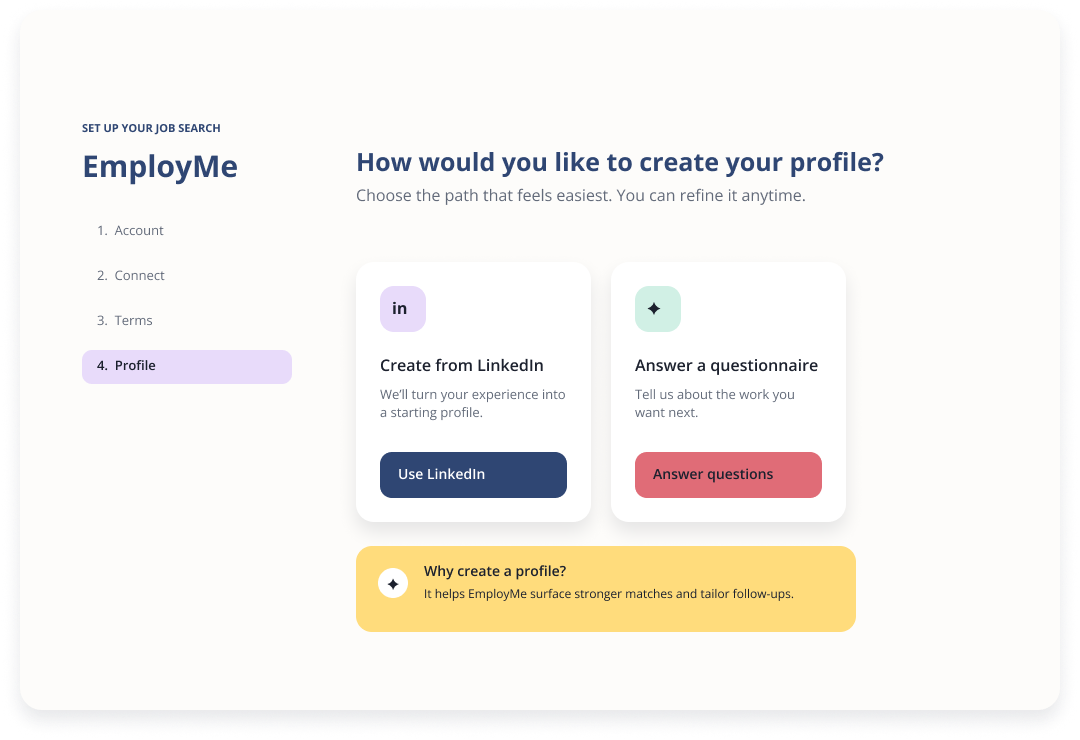
I designed a progressive flow that explains why each connection is valuable while keeping users in control.
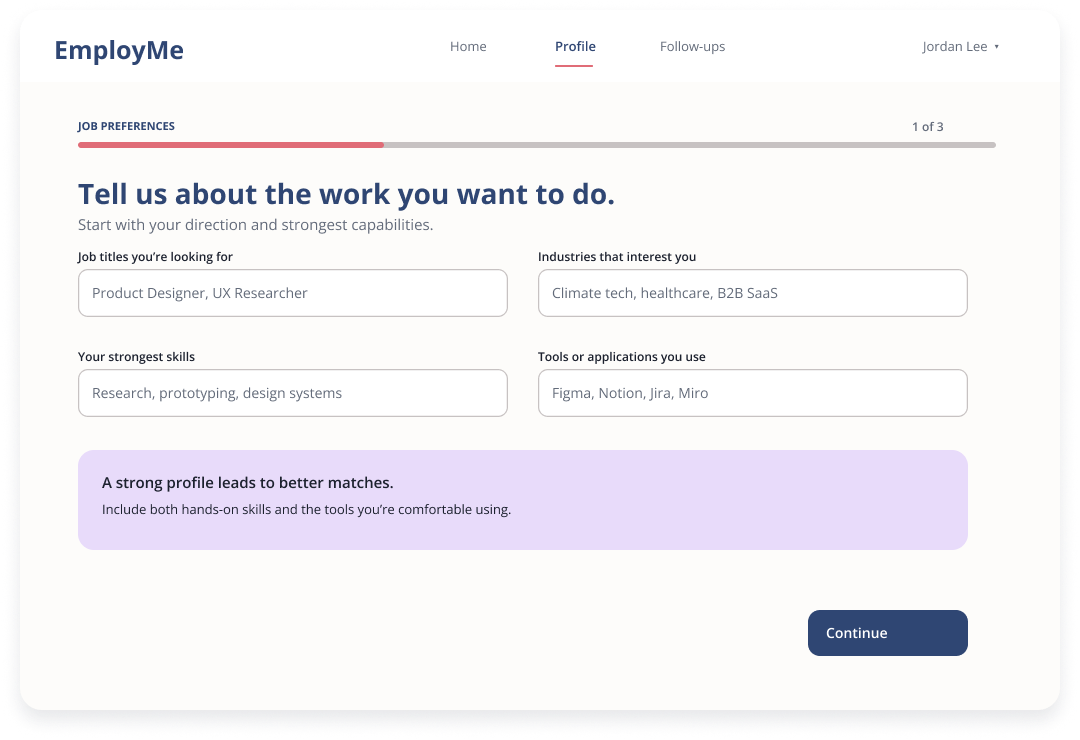
Users can connect their accounts, import their professional background from LinkedIn, or manually create a profile and define their job preferences.
03. Focusing on What Happens Next
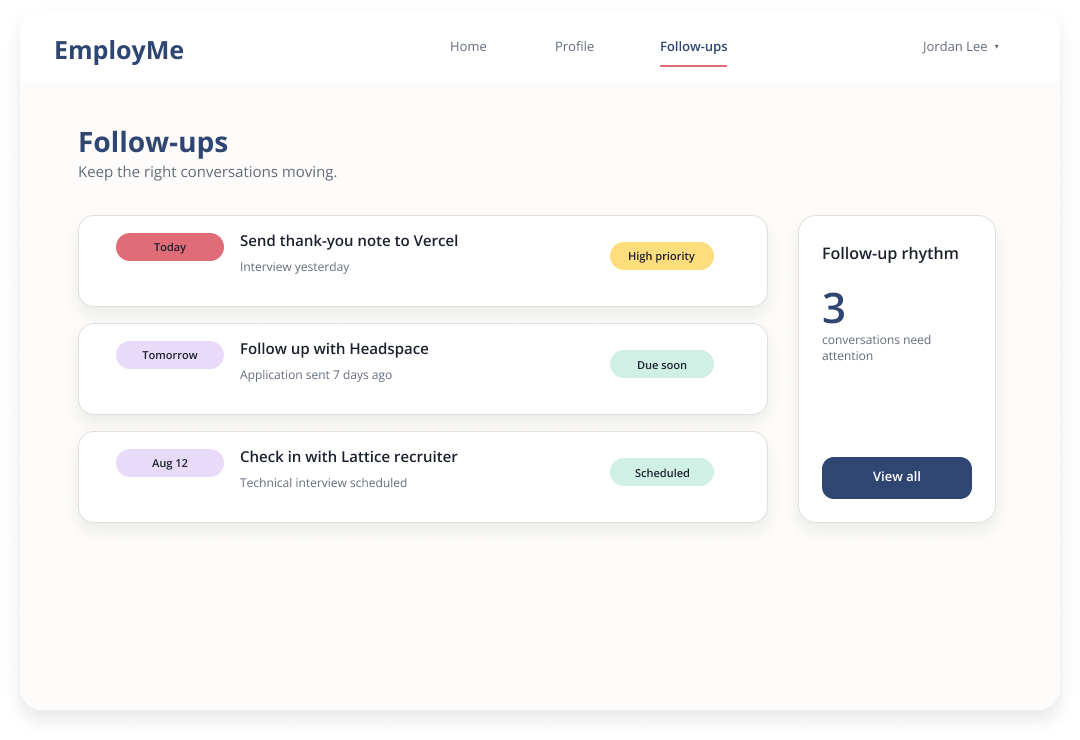
Knowing an application is in the Interview stage is useful. Knowing you should send a follow-up tomorrow is actionable.
The dashboard provides a snapshot of the entire search, while a dedicated Follow-ups experience surfaces upcoming tasks and conversations.
This shifts EmployMe from simply recording progress to helping users decide:
What should I do next?
04. Turning Research Into Interview Preparation
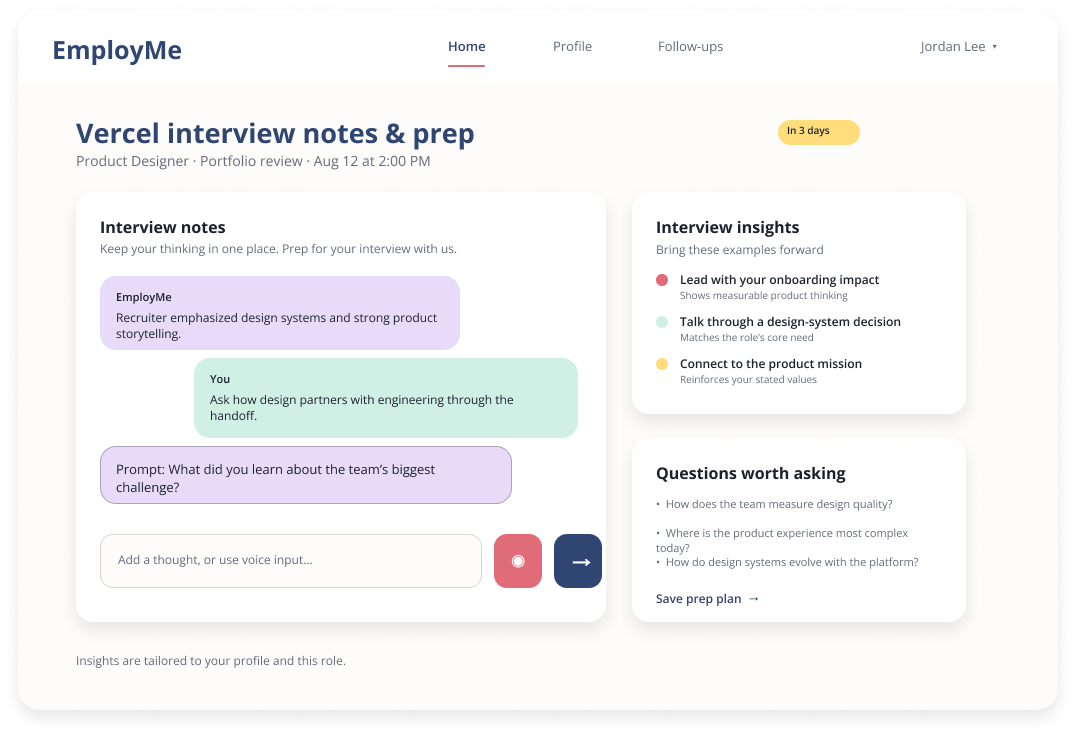
Once an application becomes an interview, EmployMe shifts from tracking to preparation.
Each opportunity brings together the job description, company information, benefits, requirements, Glassdoor sentiment, interview notes, and the candidate's own experience.
EmployMe can use that context to surface what a company may be looking for and help candidates prepare relevant talking points, questions, and examples from their experience.
Rather than adding a generic AI chatbot, the goal was to make AI useful because it already understands the context of the opportunity.

Low-Fidelity Exploration
Building the structure before the interface
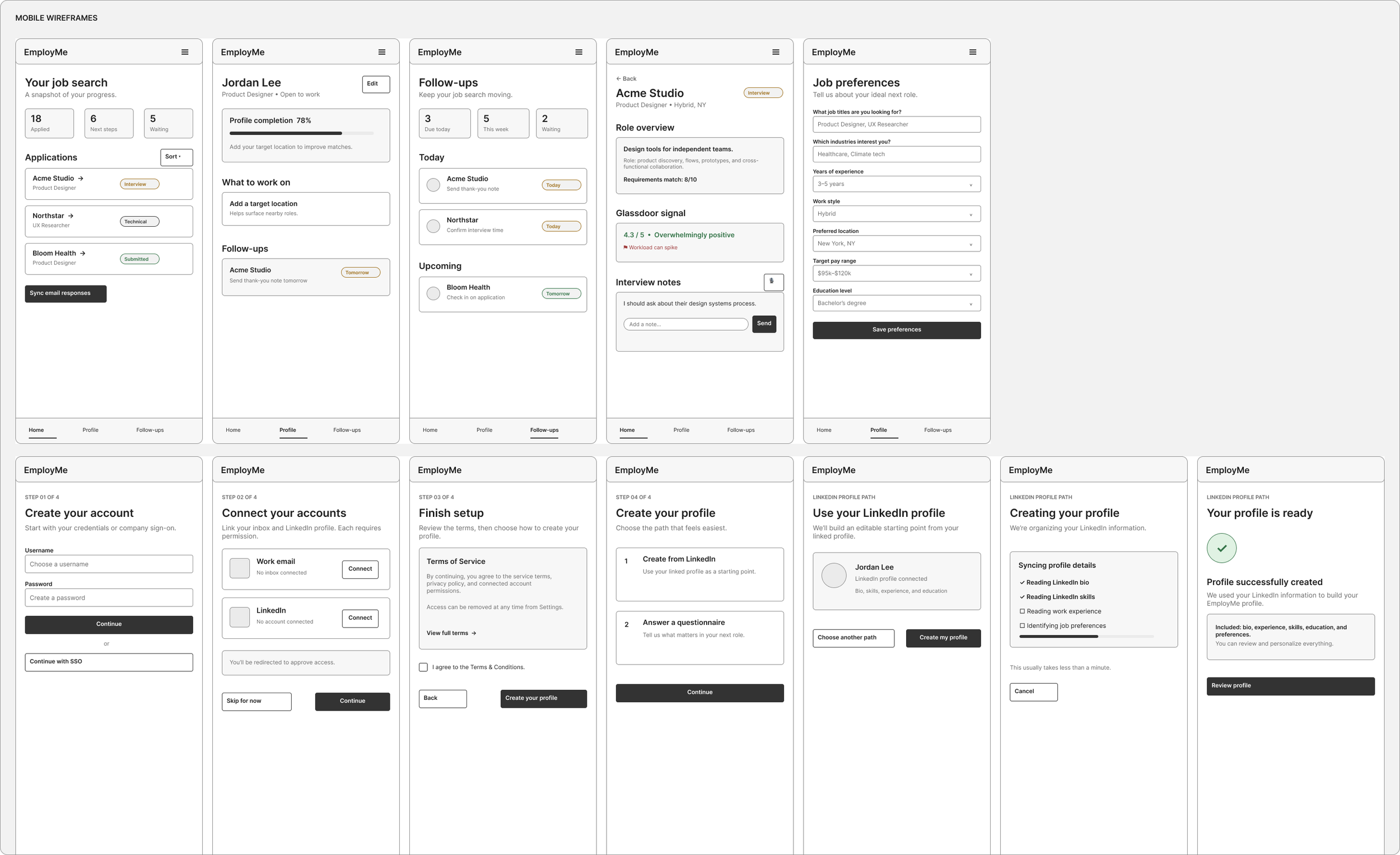
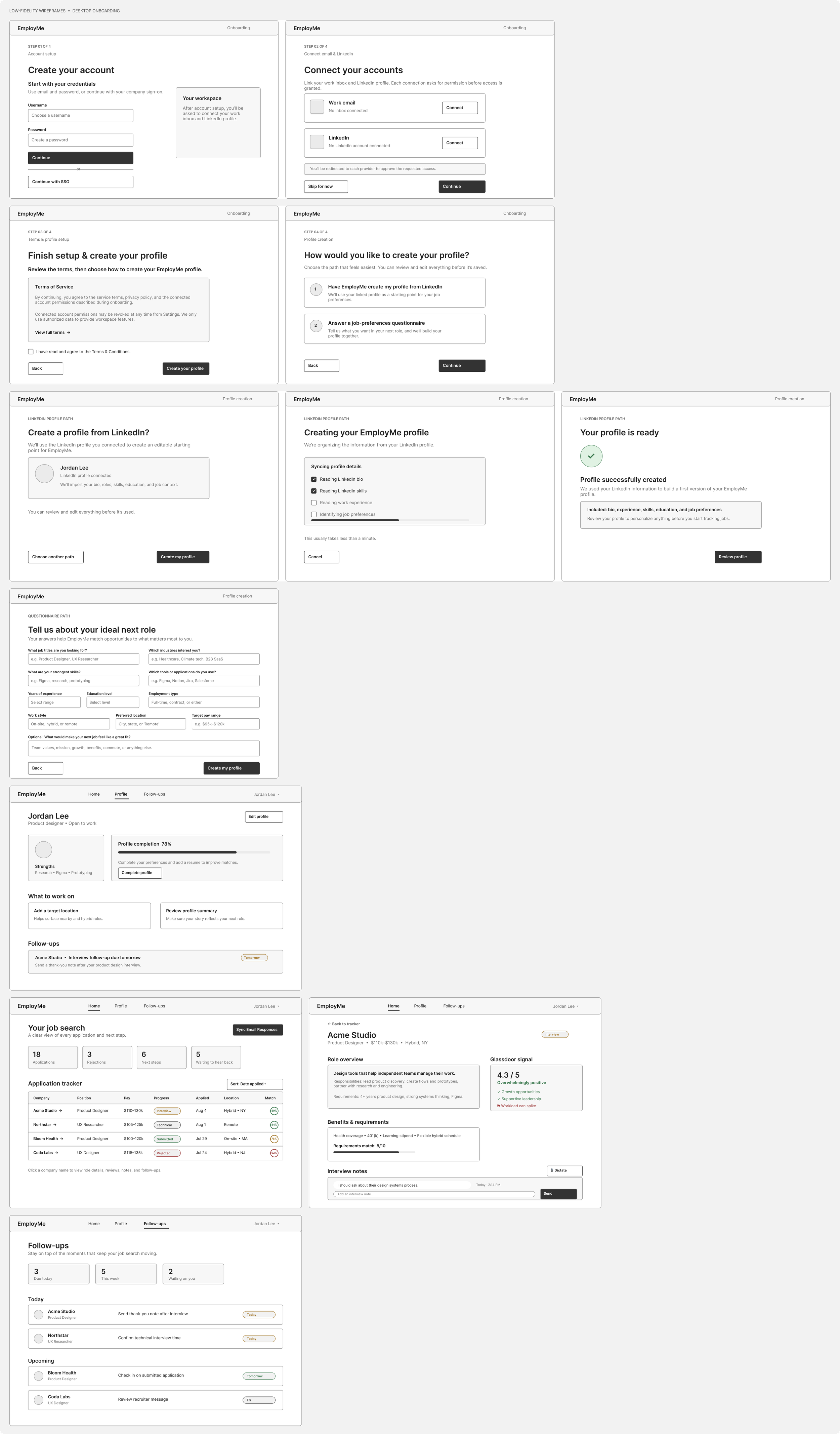
I started with low-fidelity wireframes to map the core experience and understand how users would move from onboarding into active job tracking.
The focus was on information hierarchy, navigation, and key workflows rather than visual design. I explored account connections, profile creation, application tracking, follow-ups, company details, and interview preparation across both desktop and mobile.
Working at low fidelity helped me simplify the experience and establish a consistent structure before introducing the visual system.
Key areas explored:
Onboarding · LinkedIn & email connections · Job preferences · Application tracking · Follow-ups · Company profiles · Mobile responsiveness
High-Fidelity Prototype
Turning the system into a calm, supportive experience
With the core workflows established, I translated the wireframes into a high-fidelity responsive prototype and reusable design system.
Because job searching can already feel stressful and overwhelming, I wanted EmployMe to feel calm, clear, and encouraging. Soft colors communicate application stages and priorities, while consistent cards, status indicators, and hierarchy make complex information easier to scan.
The final prototype brings the full experience together—from connecting accounts and creating a profile to automatically tracking applications, researching opportunities, managing follow-ups, and preparing for interviews.
From low-fi → high-fi
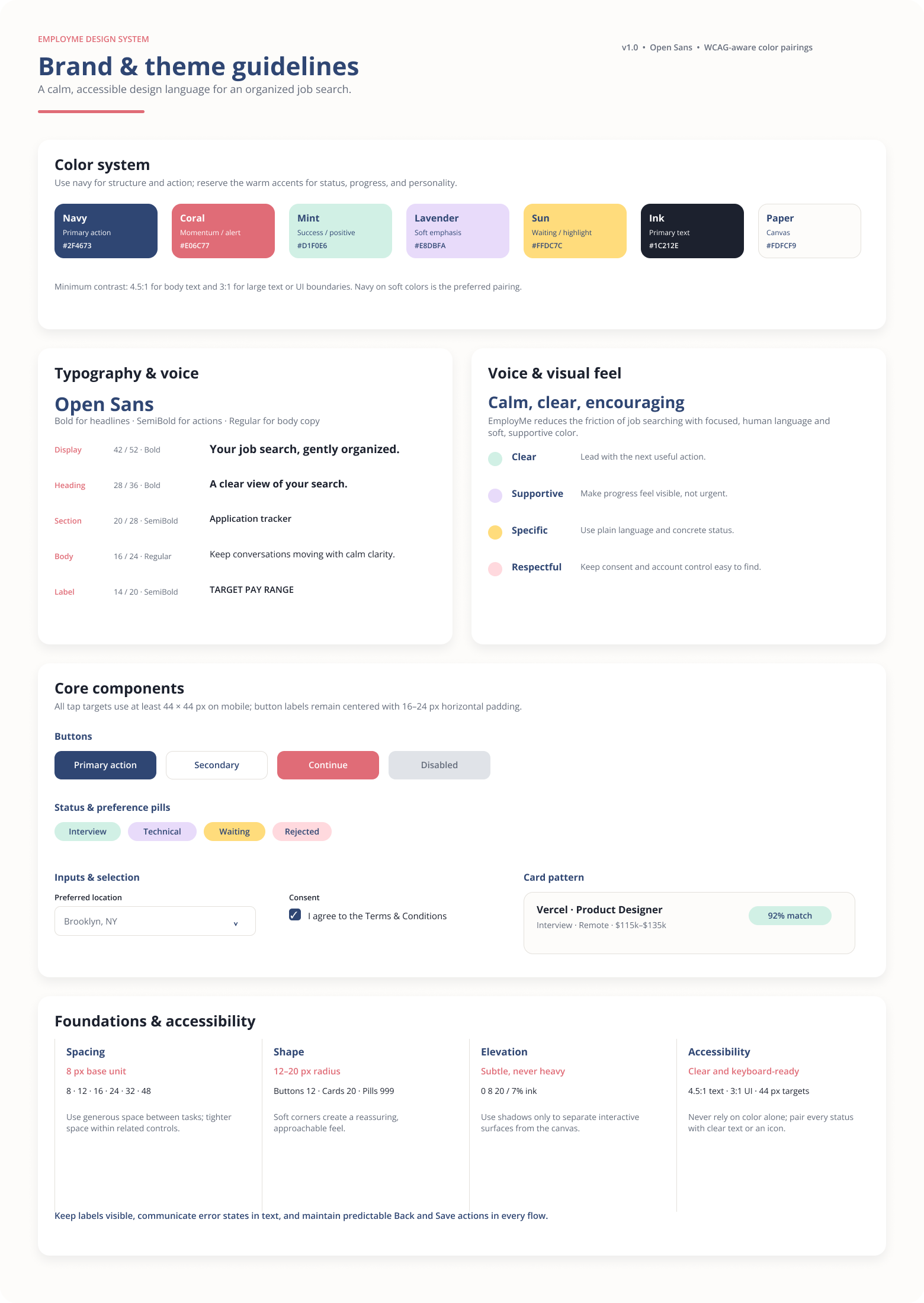
Designing the System
I moved from journey mapping and low-fidelity wireframes into a responsive desktop and mobile experience.
The visual system was designed around three principles:
Calm. Clear. Encouraging.
A reusable system of typography, cards, inputs, status indicators, spacing, and accessible color treatments allowed the experience to scale across onboarding, application tracking, company research, and interview preparation.
The Final Experience
EmployMe brings the job-search journey into one connected experience:
Connect → Track → Prepare → Follow Up → Decide
Rather than giving candidates another tool to maintain, EmployMe uses the activity already happening around their job search to organize the process for them.
The project ultimately evolved from designing a better job tracker into exploring how automation and AI could remove the need to actively track a job search at all.

