Artzy
Bringing artists, collectors, and creative exchanges together.
Artzy is a responsive art marketplace concept where users can discover original work, buy and sell, participate in auctions, trade, and request custom commissions.
I designed the experience across desktop and mobile, from onboarding and discovery through messaging, payment, and delivery.
Role
Product Designer
Scope
Product Strategy · UX/UI Design · Prototyping · Responsive Design · Brand Development · Design System
Platform
Desktop + Mobile
Tools
Figma · FigJam · Adobe Creative Sui
The Problem
Art is personal. Buying and selling it can feel disconnected.
Artists often rely on a combination of social media, marketplaces, direct messages, and payment tools to sell their work. Collectors move between those same channels to discover artists, ask questions, and arrange purchases.
Commissions and trades add another layer of coordination, requiring conversations about budgets, timelines, references, and deliverables.
How might I bring these exchanges into one experience while preserving the relationship between artist and collector?
Defining the Experience
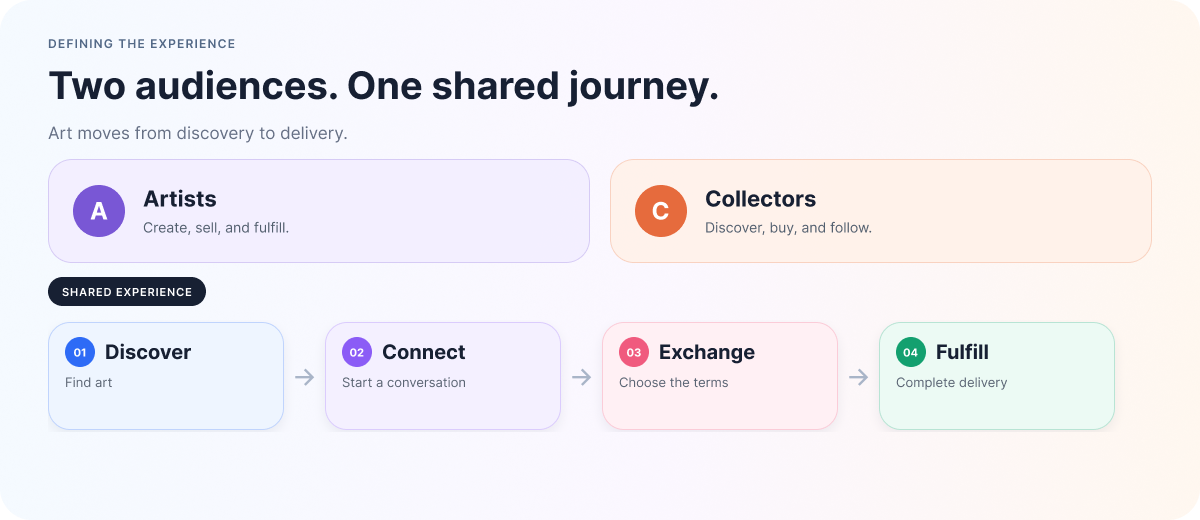
One community, different ways to participate.
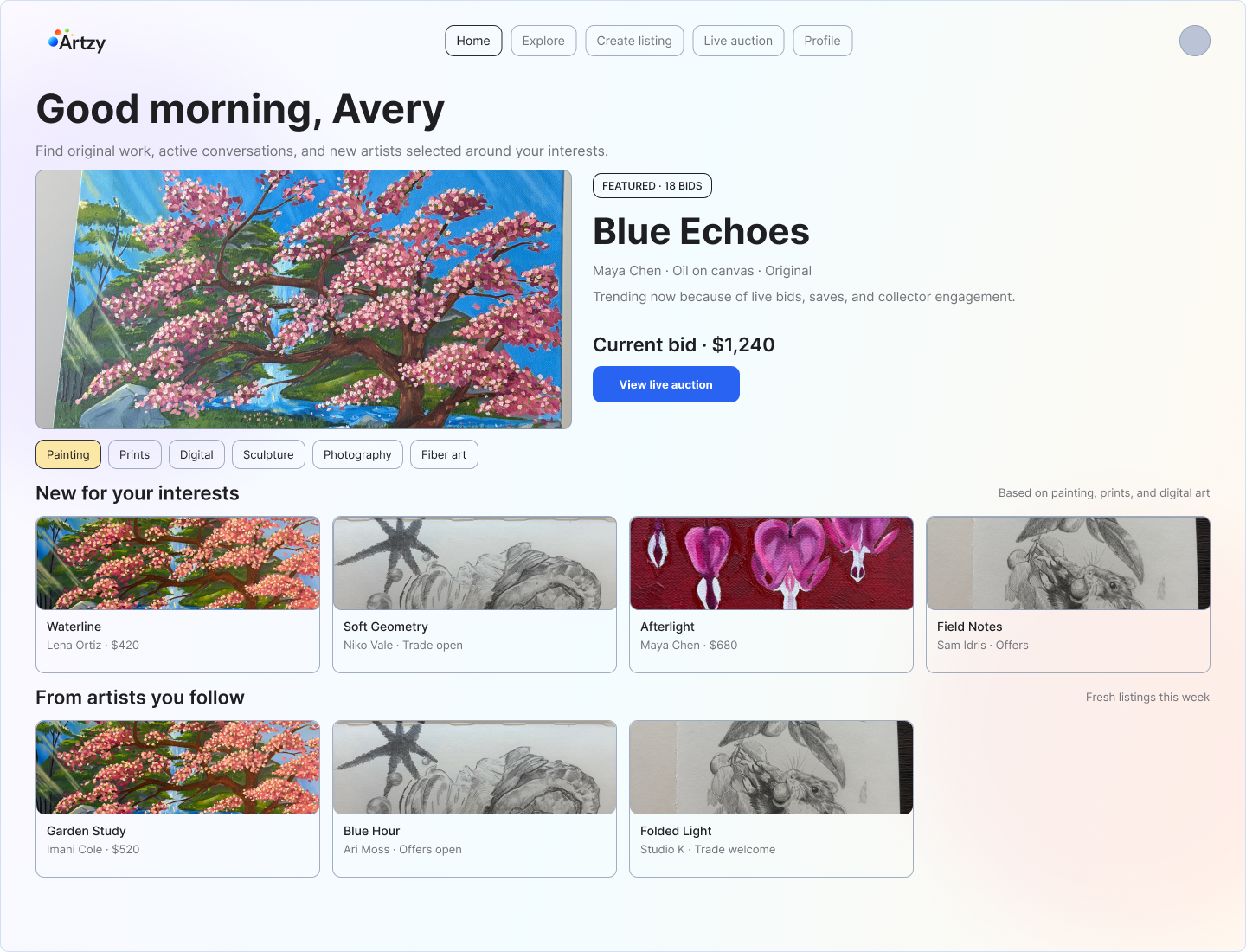
01. Personalized Discovery
Helping users find their place in the marketplace.
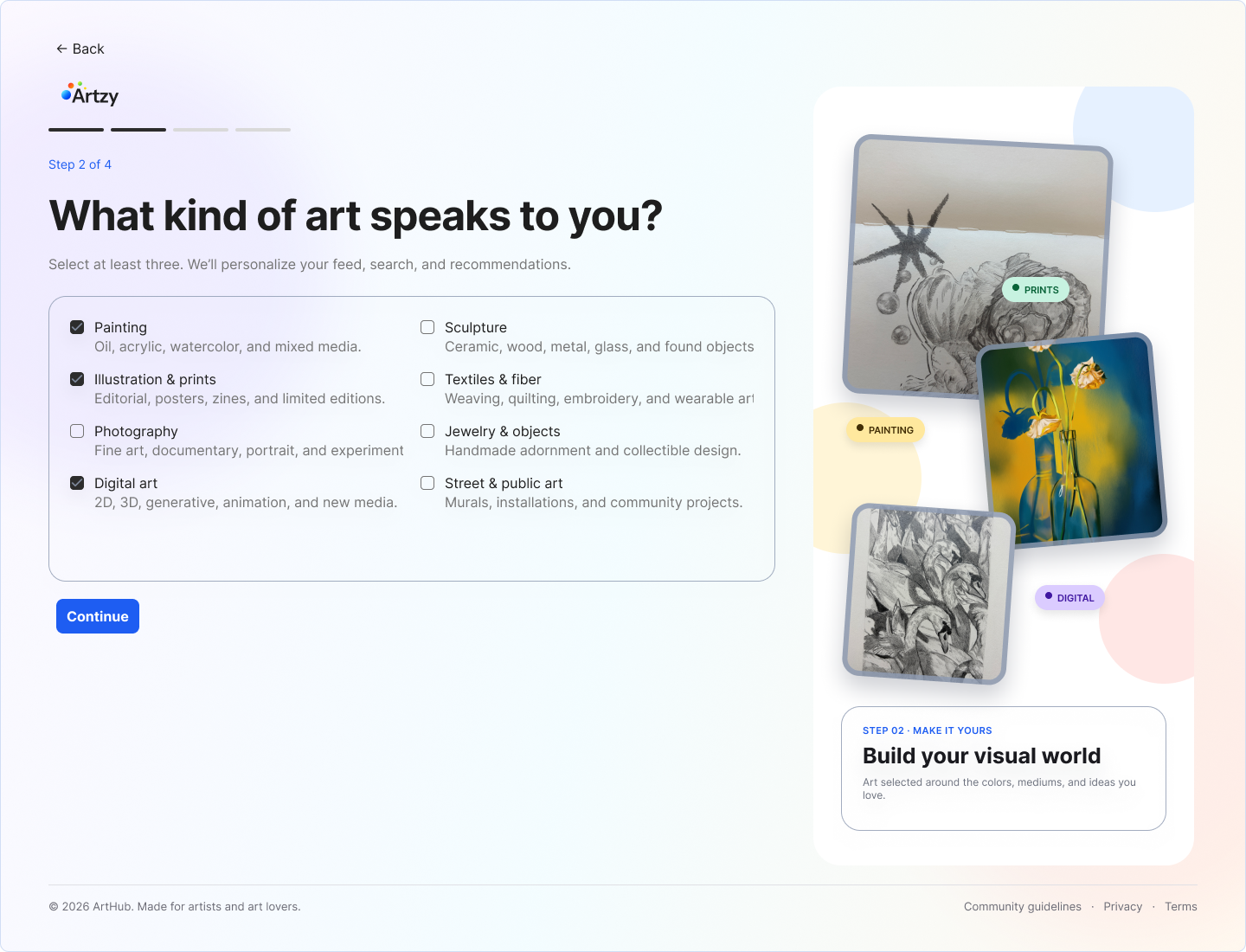
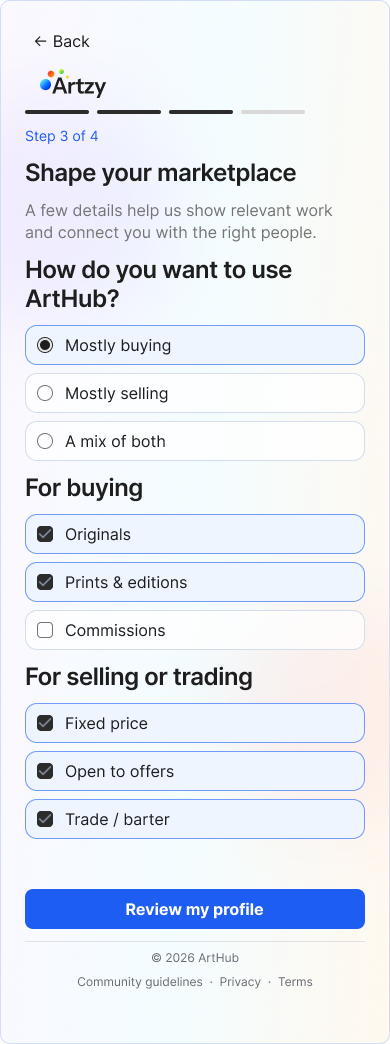
Onboarding introduces Artzy through the user’s interests and intentions. Users select the types of art they enjoy and whether they want to buy, sell, trade, or explore.
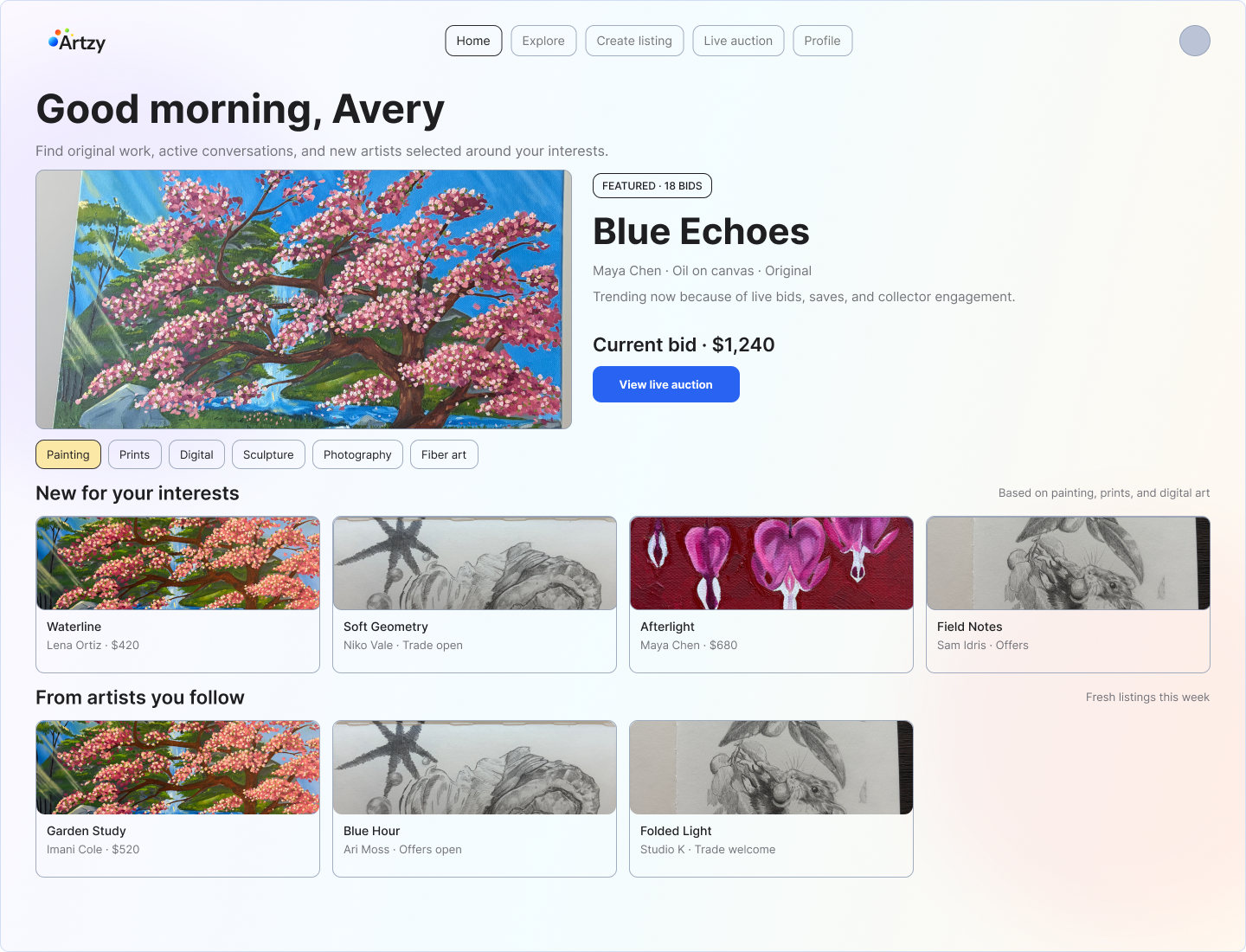
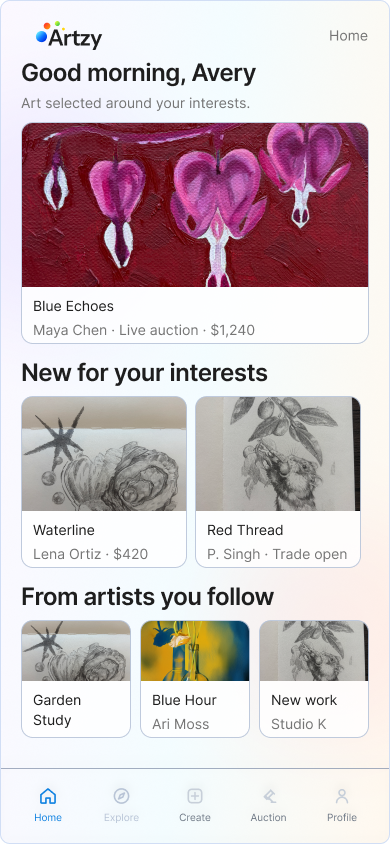
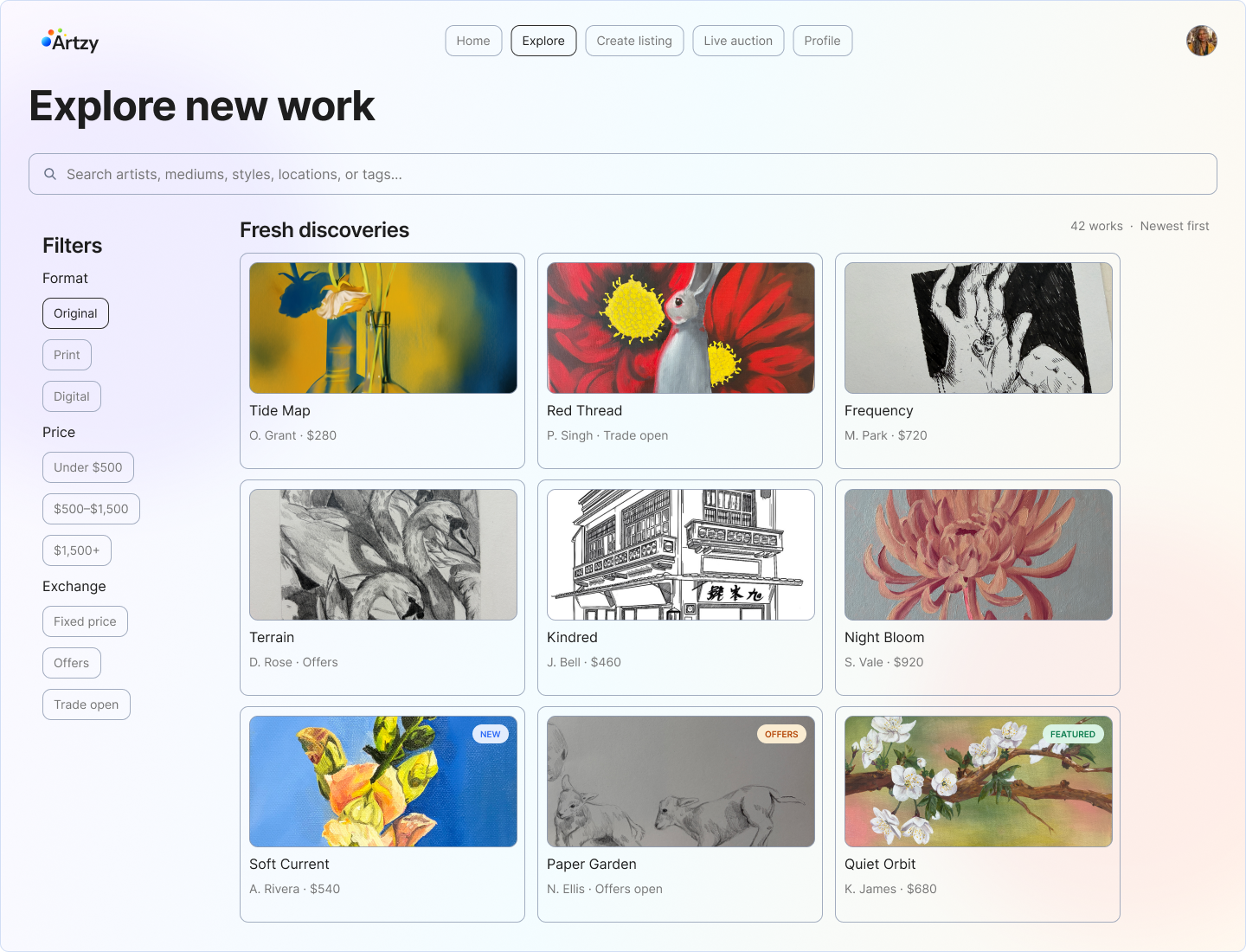
These preferences inform a Home experience featuring relevant listings, original work, and artists they follow. Explore provides a broader entry point for searching categories and discovering unfamiliar artists.
The goal was to make the marketplace feel relevant while leaving room for unexpected discoveries.
02. Flexible Ways to Exchange Art
Giving artists more control over how they sell.
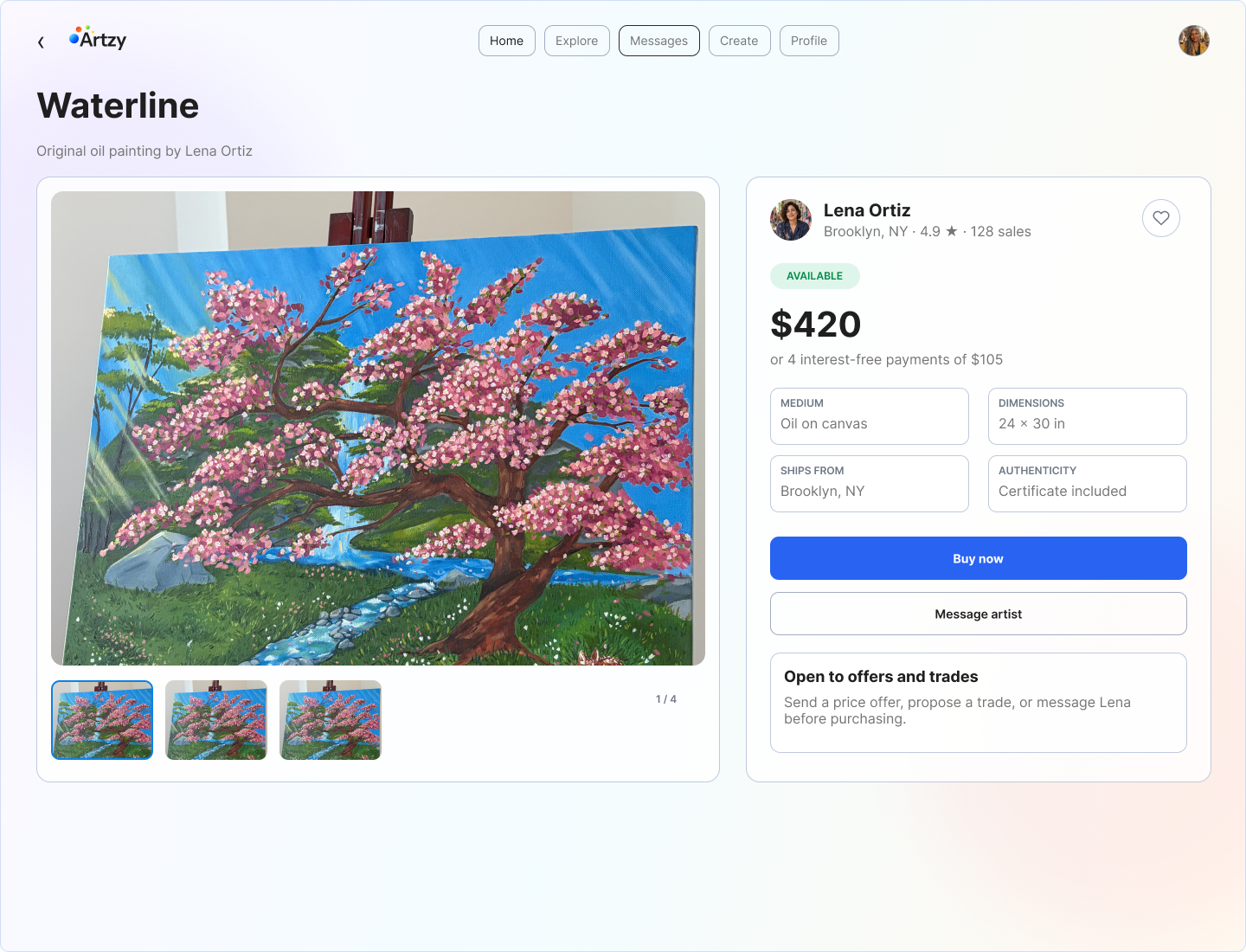
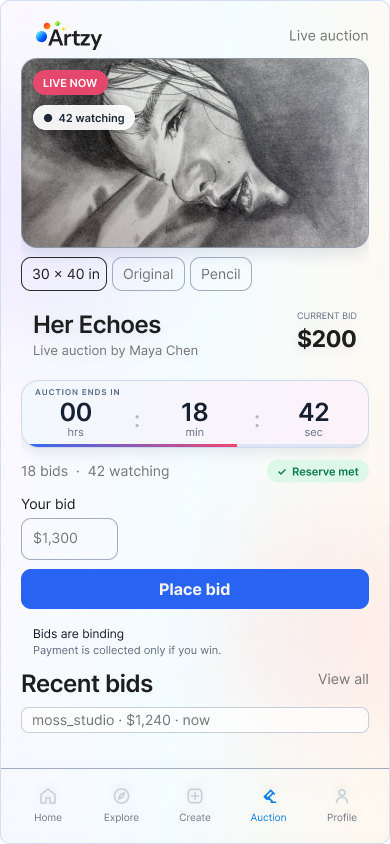
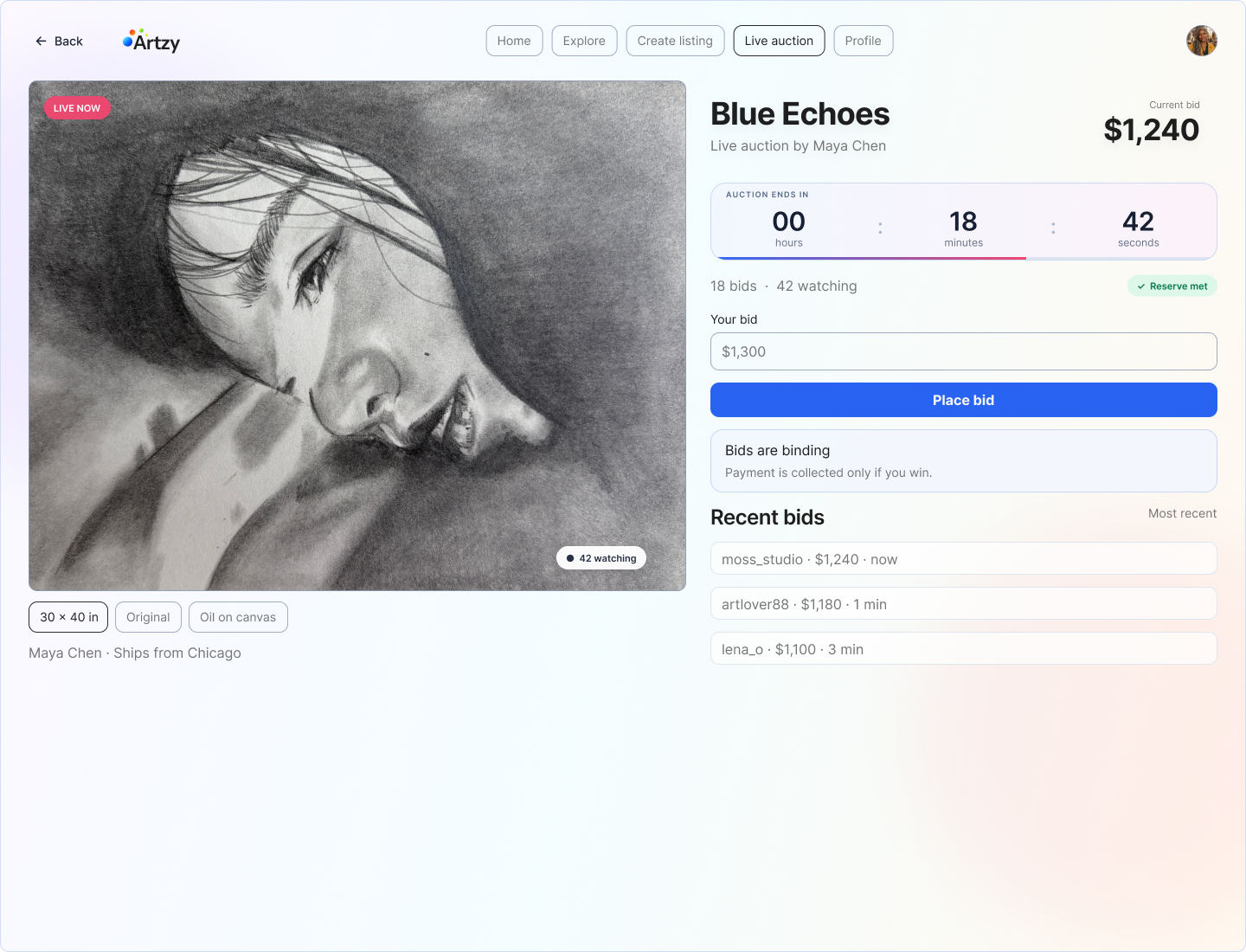
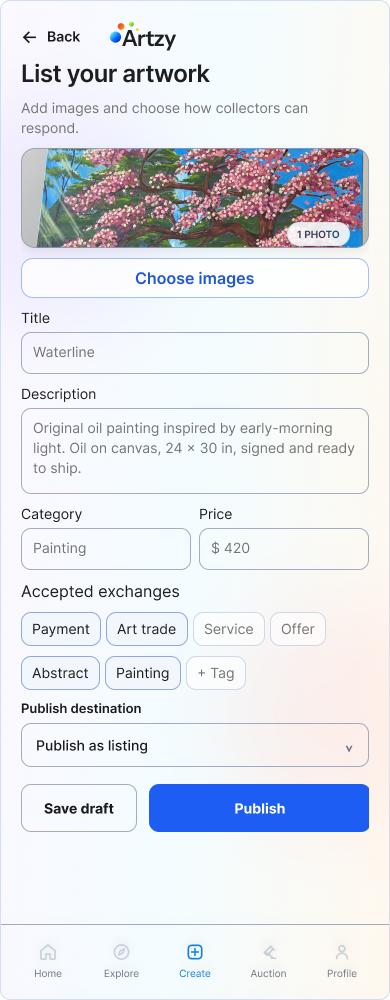
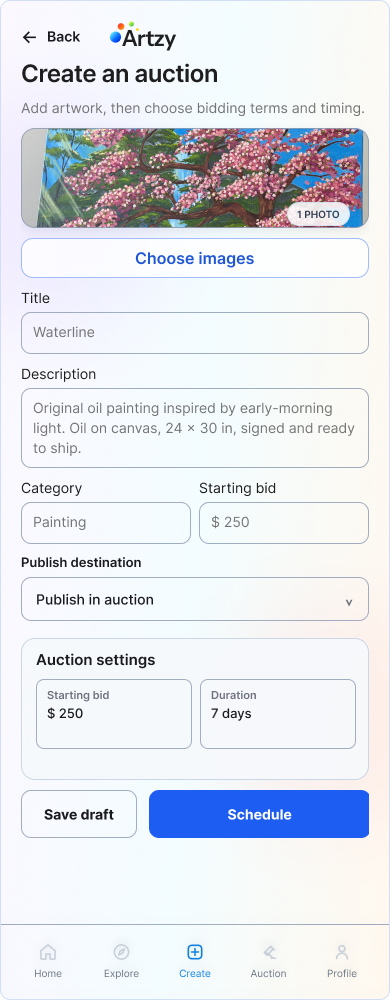
Art does not always change hands through a fixed-price purchase. Artists may welcome offers, exchange work or services, or choose to auction a piece.
I designed a consistent listing flow that adapts to the publishing method. Standard listings capture price and fulfillment details, while auction listings introduce bidding requirements and duration.
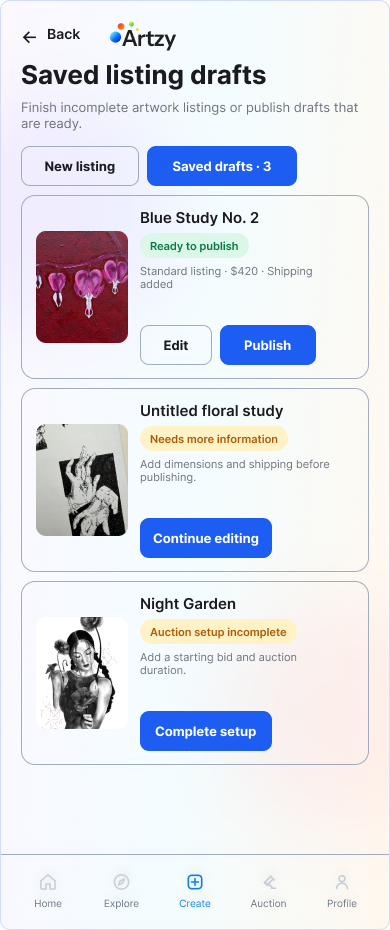
Saved drafts allow artists to return later, with clear indicators showing which listings are ready to publish and which need more information.
03. Commissions Through Conversation
Creating a shared understanding before the work begins.
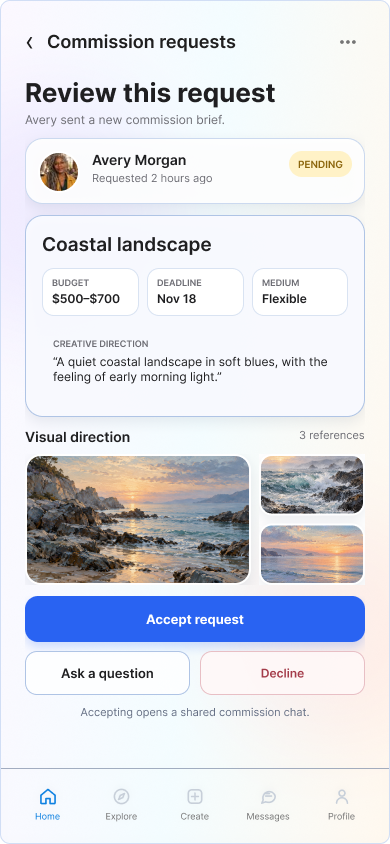
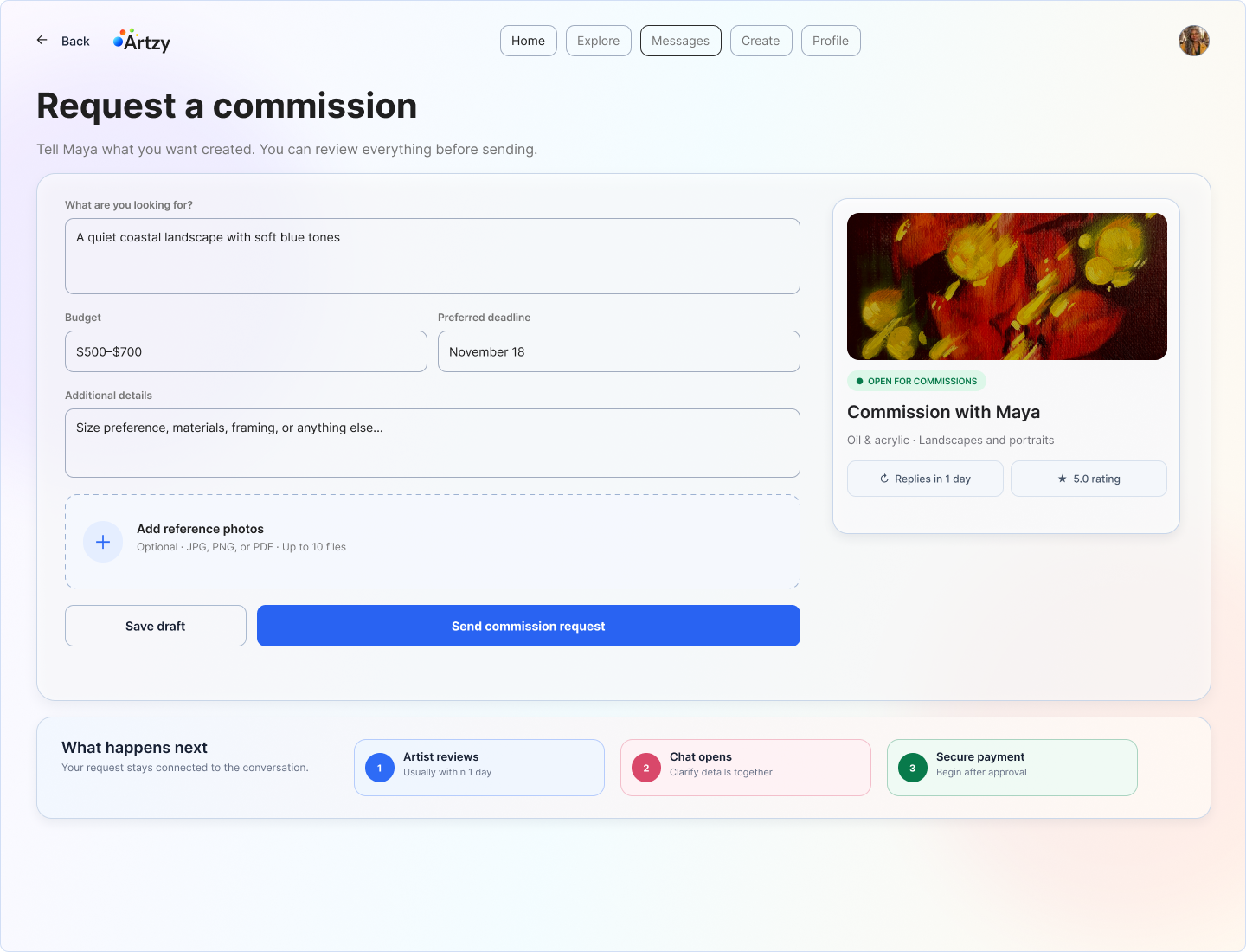
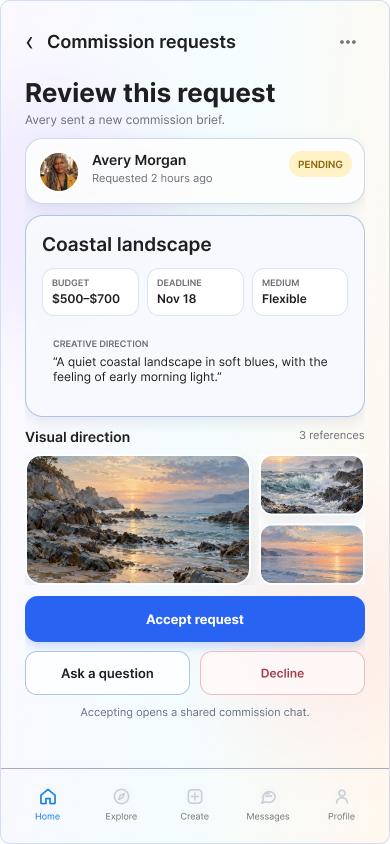
A commission request needs more context than a typical purchase. The request form captures the buyer’s idea, budget, deadline, medium, and optional reference images.
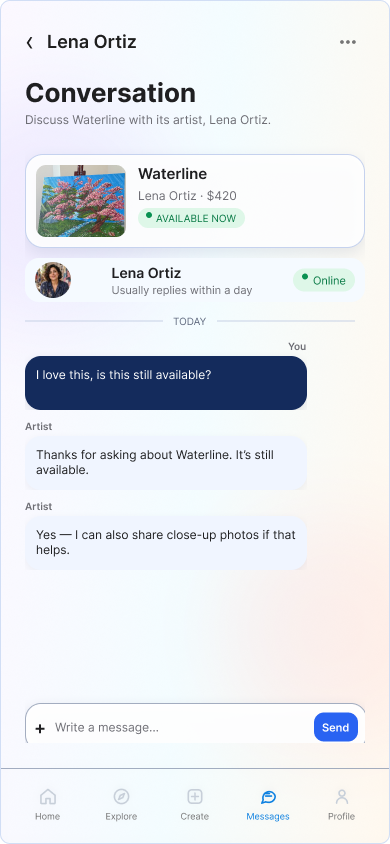
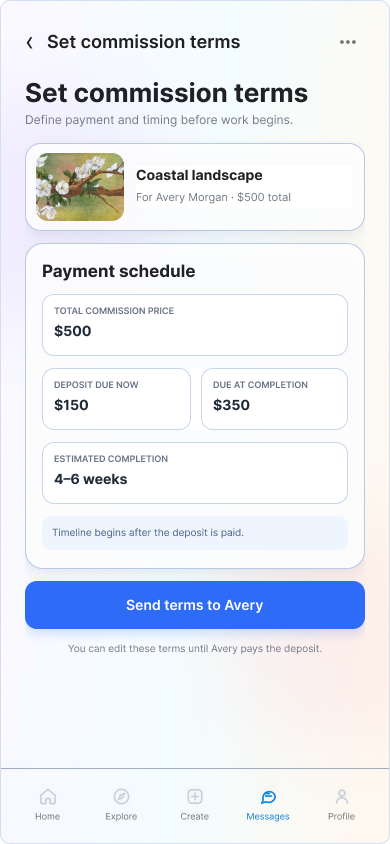
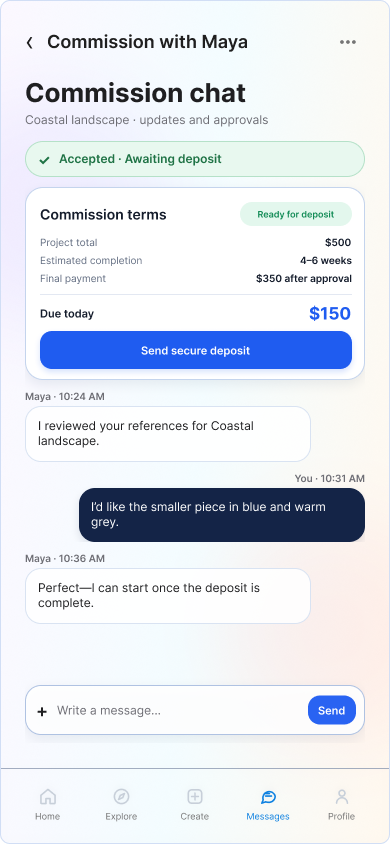
Artists can review those details before accepting or declining. Accepted requests lead into a conversation where both participants can clarify expectations and coordinate the work.
Keeping the request connected to the conversation gives the artist and buyer a shared reference throughout the commission.
04. From Payment to Delivery
Making the next step clear.
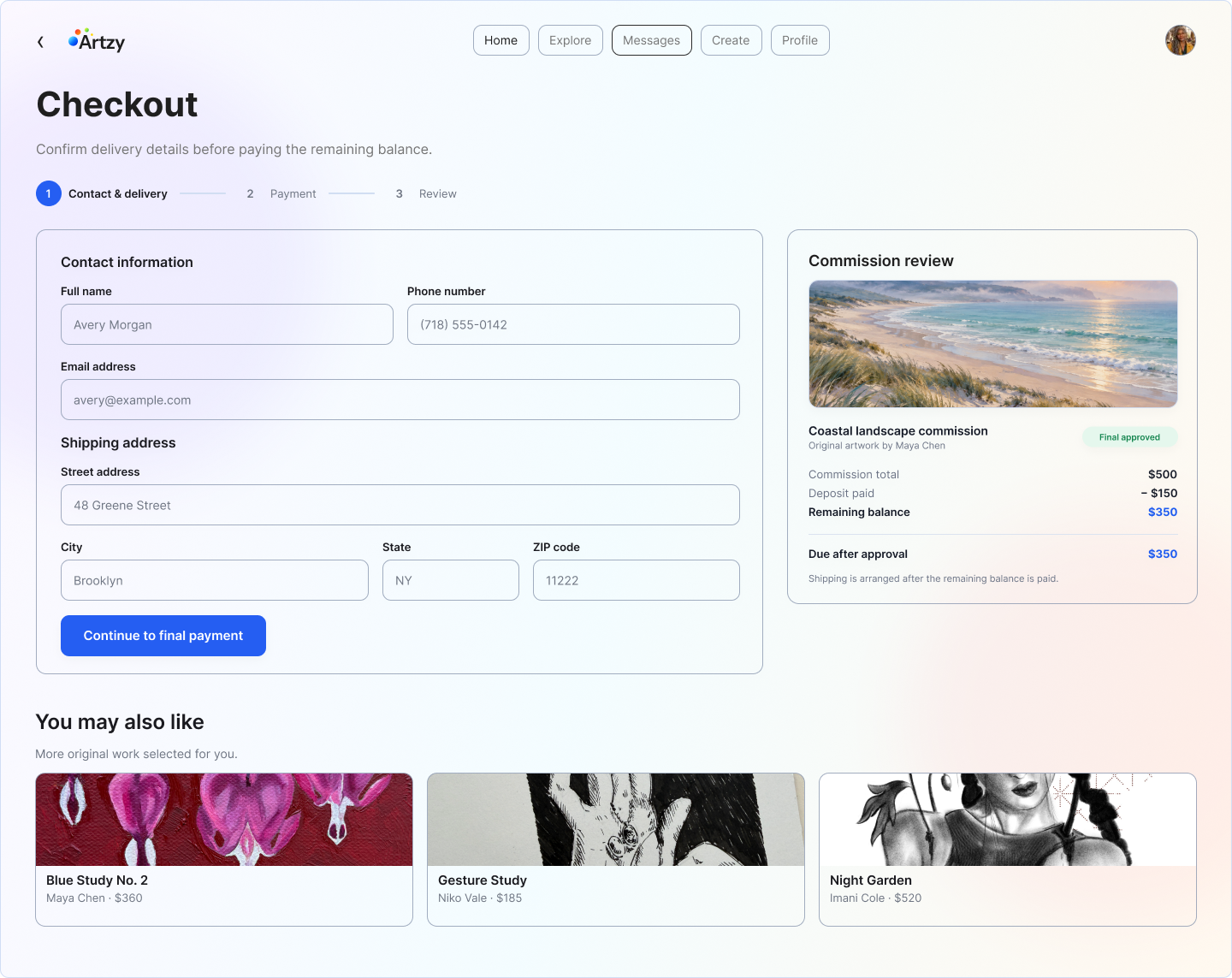
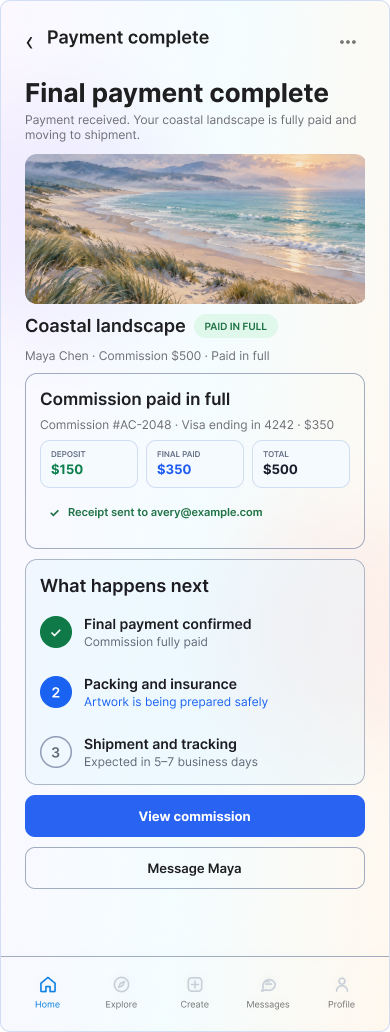
The transaction continues after the user presses “Buy.” Buyers need to understand their total, confirm delivery details, and know what happens after payment.
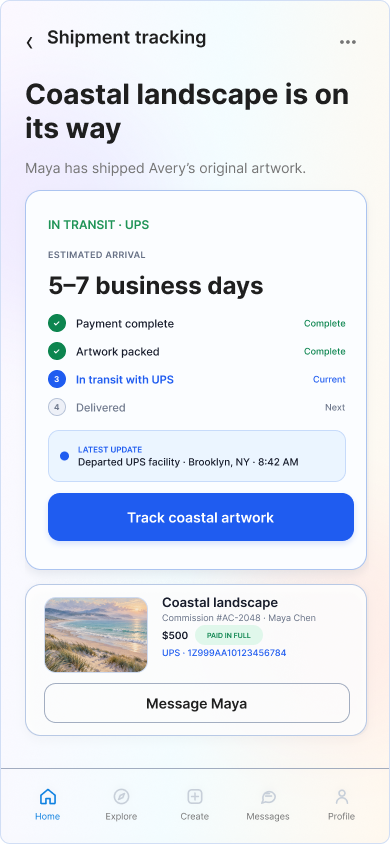
I divided checkout into contact and delivery, payment, and review. Confirmation then introduces the fulfillment stages, from artist preparation to shipment and tracking.
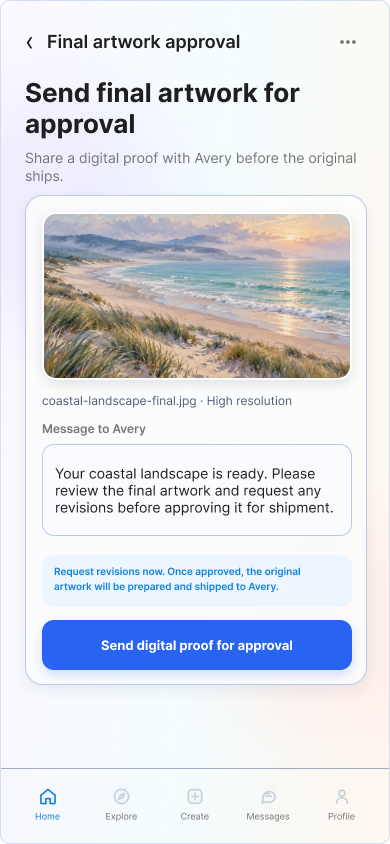
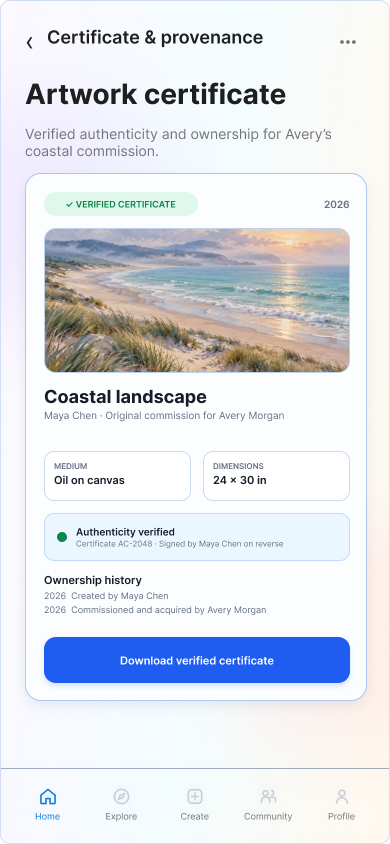
The experience also accounts for digital delivery, revisions, refunds, and delayed or damaged orders, keeping the artwork and relevant actions visible.
Building the Visual System
Letting the artwork lead.
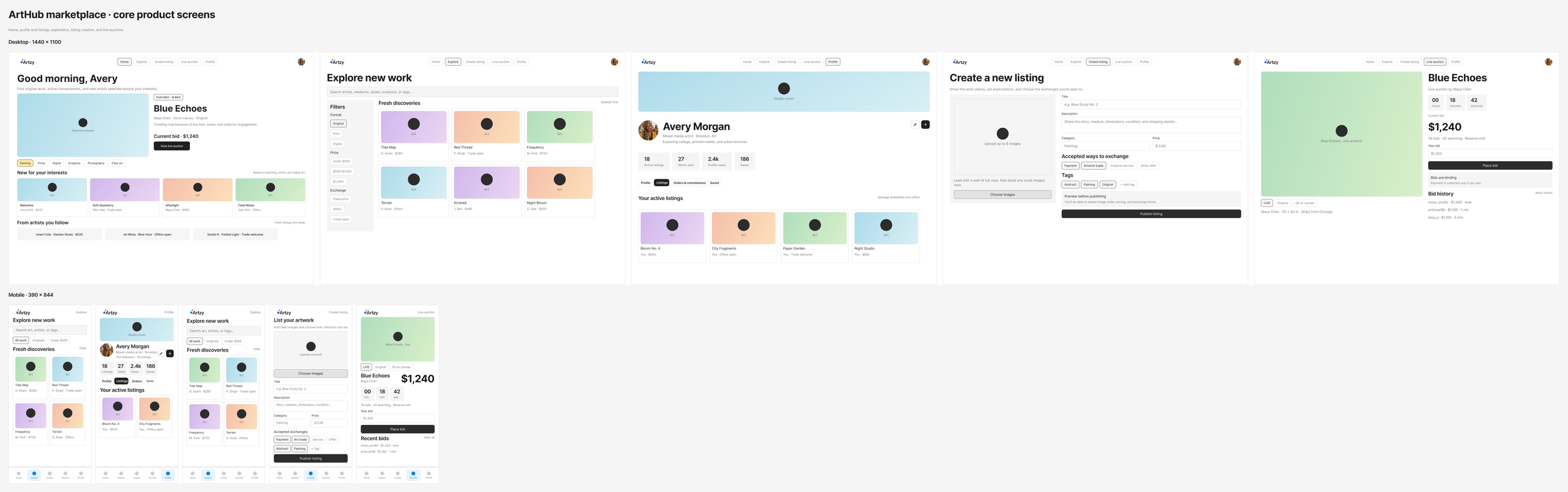
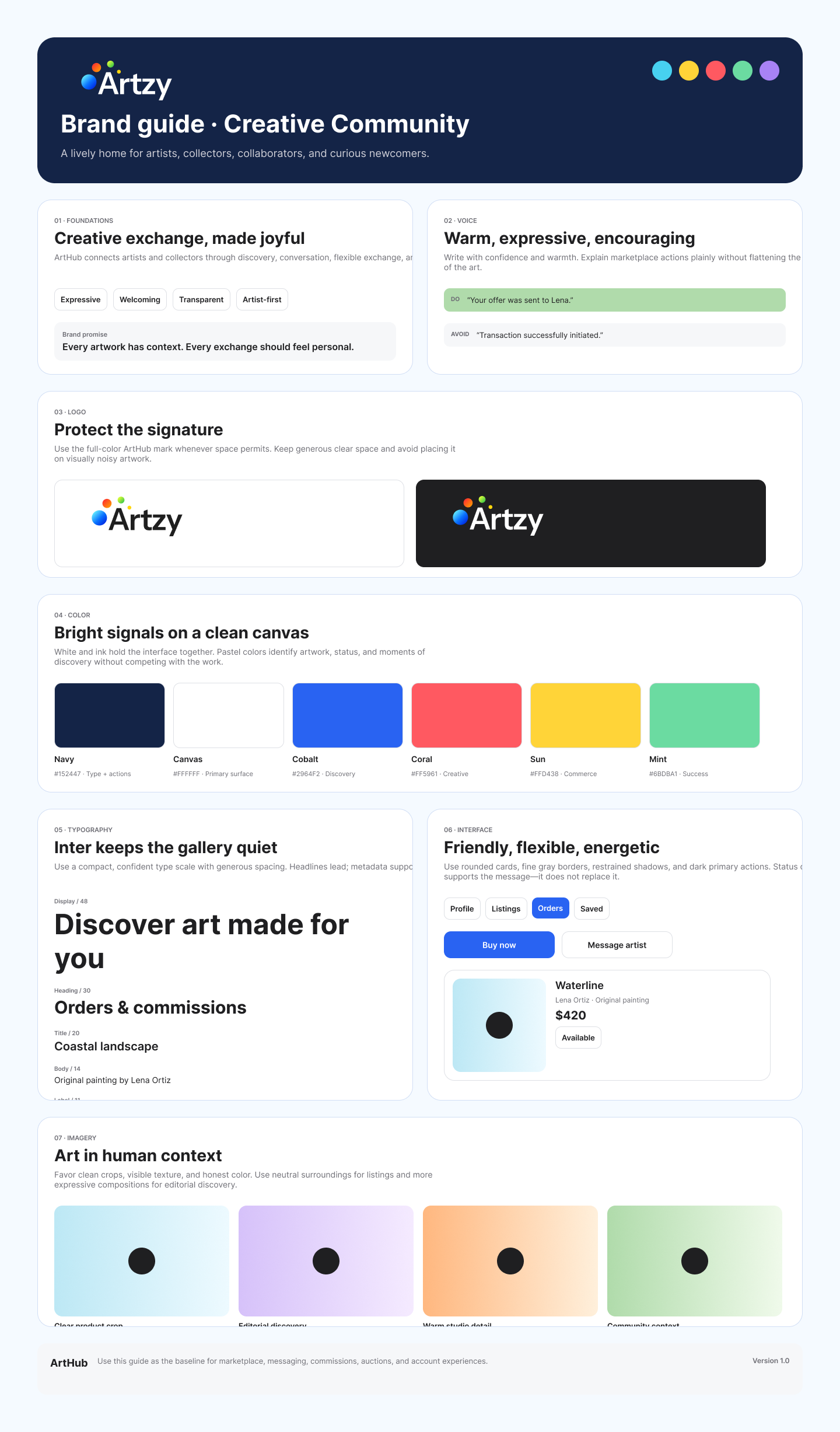
I moved from low-fidelity wireframes into a shared visual system for desktop and mobile. Iteration focused on spacing, hierarchy, navigation, and consistent actions across the growing marketplace.
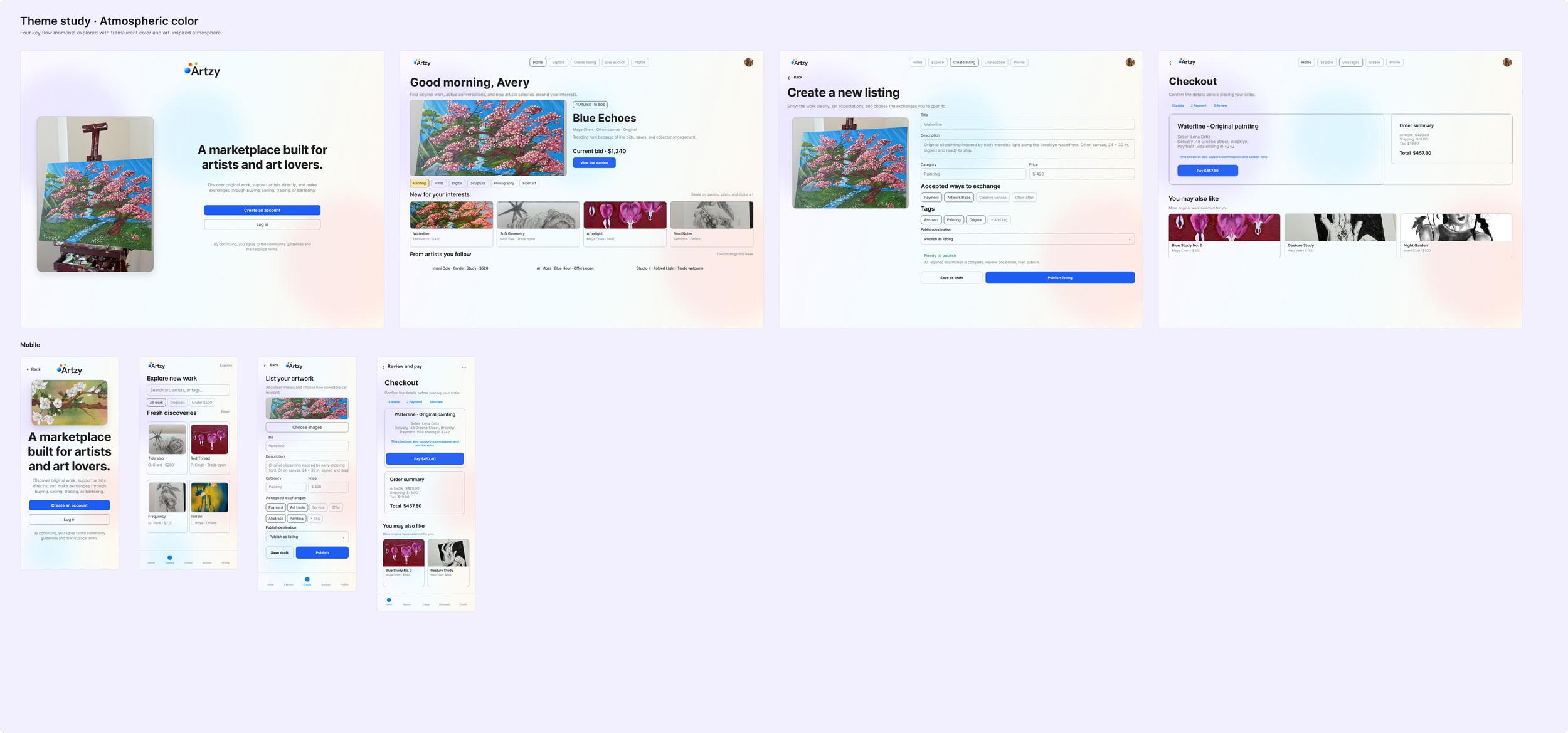
Colorful branding and soft backgrounds give Artzt a creative identity, while neutral typography and restrained interface elements keep attention on the artwork.
On mobile, persistent bottom navigation and stacked layouts support the same core journeys within a smaller screen.
The Final Experience
A marketplace built around the artist–collector relationship.
Artzy connects discovery, flexible selling, commissions, communication, and fulfillment in one responsive prototype.
The project pushed me to consider how each interaction affects the next: a listing becomes a conversation, a request becomes an agreement, and a purchase becomes a delivery.
The next step would be testing these connected journeys with artists and collectors, particularly commission requests, auction creation, and trades, to understand where users need more guidance or reassurance.